Monday, May 30, 2011

USS LEXINGTON


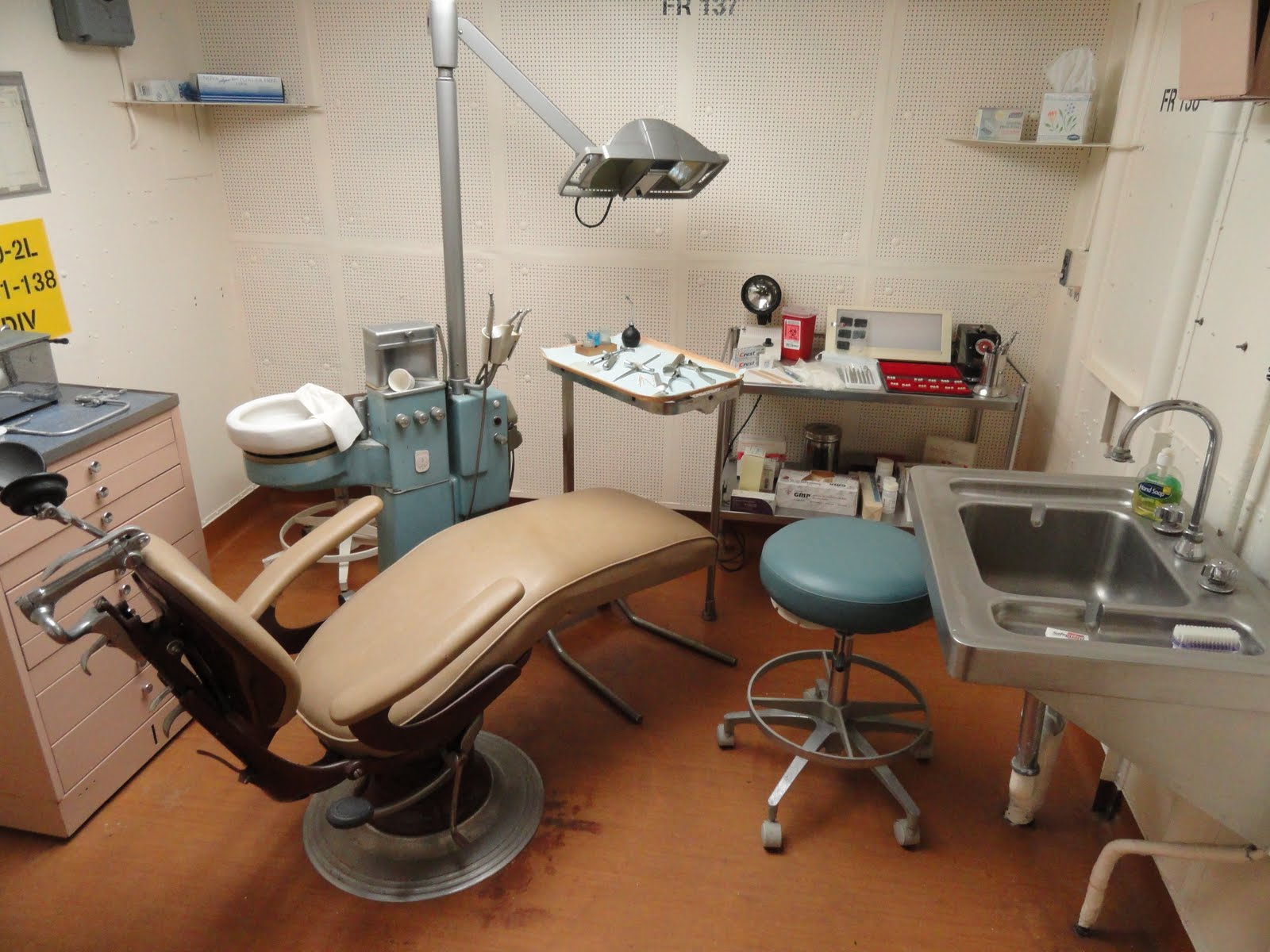
Say what you will about Americans, they are fiercely proud of their history and their Armed Forces. The USS Lexington is docked at Corpus Christie and has numerous volunteers on duty to teach the students on their field trips as well as the general public. It was a wonderful afternoon.


USS Lexington (CV/CVA/CVS/CVT/AVT-16), known as "The Blue Ghost", is one of 24 Essex-class aircraft carriers built during World War II for the United States Navy. The ship, the fifth US Navy ship to bear the name, is named in honor of the Revolutionary War Battle of Lexington. She was originally to have been named Cabot, but she was renamed while under construction to commemorate USS Lexington (CV-2), lost in the Battle of the Coral Sea in May 1942.[1]


Lexington sailed to raid Kwajalein on 4 December. Her morning strike destroyed the SS Kembu Maru, damaged two cruisers, and accounted for 30 enemy aircraft. Her gunners splashed two of the enemy torpedo planes that attacked at midday, but were ordered not to open fire at night as the Admiral[who?] then in command believed it would give their position away (He was later replaced). At 1920 that night, a major air attack began while the task force was under way off Kwajalein. At 2322, parachute flares from Japanese planes silhouetted the carrier, and 10 minutes later she was hit by a torpedo on the starboard side, knocking out her steering gear. Nine people were killed, two on the fantail and seven in the Chief Petty Officers mess room, which was a repair party station during general quarters. Four members of the affected repair party survived because they were sitting on a couch that apparently absorbed the shock of the explosion. Settling 5 feet (2 m) by the stern, the carrier began circling to port amidst dense clouds of smoke pouring from ruptured tanks aft. To maintain water tight integrity, damage control crews were ordered to seal the damaged compartments and welded them shut applying heavy steel plates where needed. An emergency hand-operated steering unit was quickly devised, and Lexington made Pearl Harbor for emergency repairs, arriving on 9 December. She reached Bremerton, Washington on 22 December for full repairs, completed on 20 February 1944. The error in judgment concerning opening fire at night was never repeated again, as gun crews were then ordered to open fire anytime the ship came under attack. The 40 mm "Quads" were most effective from then on. The "Blue Ghost" was reported sunk by Japan's Tokyo Rose – as she would come to say again and again, the ship sank beneath the deep blue seas.


She was decommissioned in 1991, remaining active longer than any other Essex-class ship, and was donated for use as a museum ship in Corpus Christi, Texas. Lexington was designated a National Historic Landmark in 2003. Though her surviving sisterships Yorktown, Intrepid, and Hornet carry lower hull numbers,

PORT ARANSAS, TEXAS


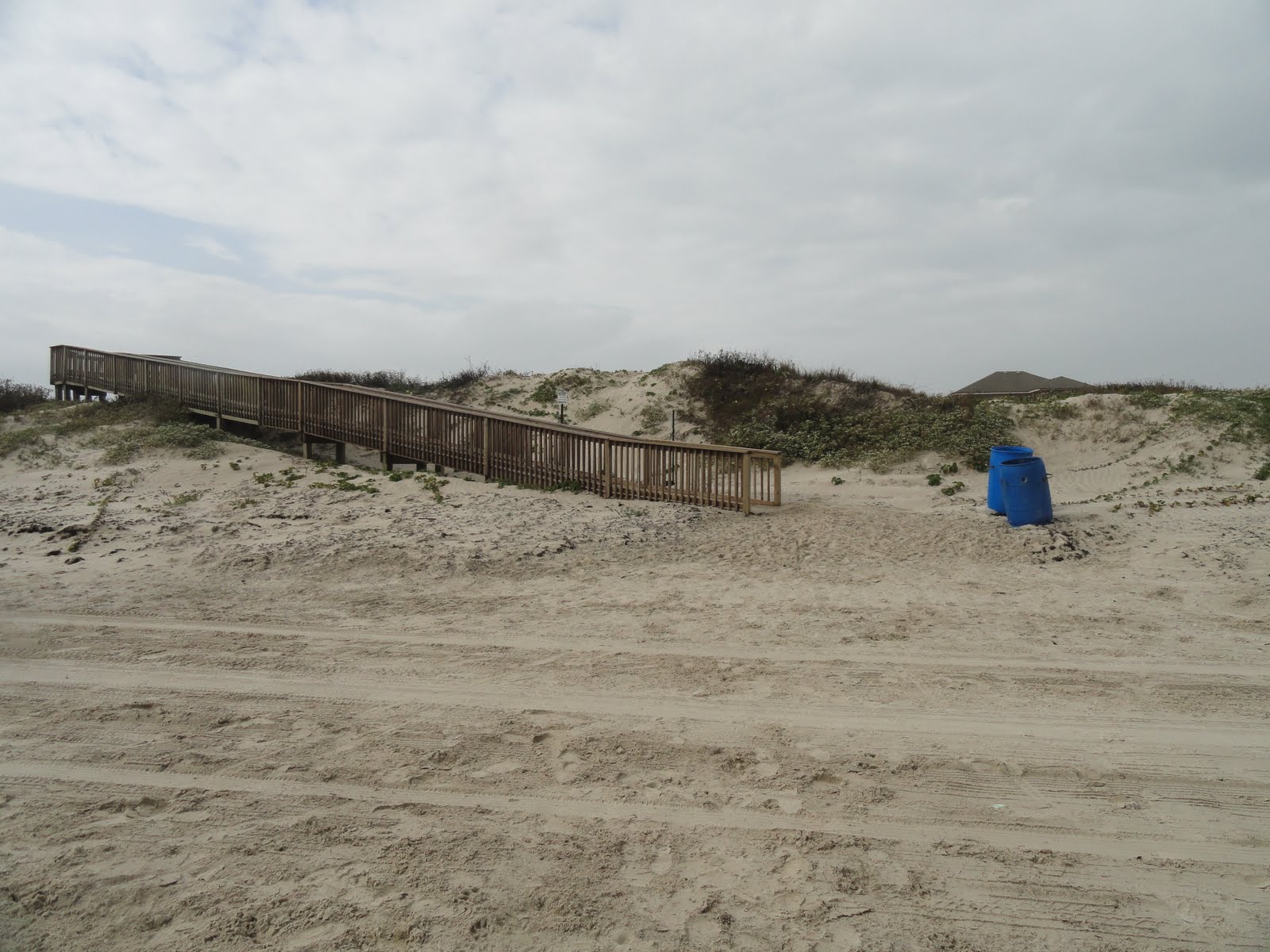
While I was in San Antonio, someone suggested that I go the Port Aransas just outside Corpus Christie and so I did. I have found some of the best spots by following others suggestions and this one was great. I stayed at an RV Resort that is strata so the RVers own their sites. Some own more that one and many rent out their sites when they are not using them. There is a private boardwalk to the beach right on the Gulf of Mexico. The beach is very wide so you can drive on the beach by access it at several different points. I decided to drive the beach one afternoon and it was marvellous. After about 30 minutes I was ready to get back onto the road but was having trouble finding the access. I asked a woman and she said that the next access was about 3 miles so I drove and almost missed the road. I made a sharp right hand turn and promptly got stuck in about 8 inches of soft sand. No big deal! Even though the truck is only two wheel drive, I have driven in snow and how hard can it be to get out of some sand. It wasn’t so much the sand that was the immediate problem but the incoming tide that caused my heart to skip a beat. But I persevered and was able to get unstuck. Didn’t want to try that access road so I drove back down the beach the way I had come (although less beach due to the incoming tide) and got back on to blacktop. So much for think I was sixteen and cruising Daytona Beach for cute guys.

A little history of Port Aransas
Karankawa Indians played a key role in the early development of the Texas Gulf Coast.[3] The Karankawa Indians inhabited the Gulf Coast of Texas from Galveston Bay all the way to Corpus Christi Bay. The Karankawa Indians led a nomadic existence, migrating from the mainland to the coast. One of the places they lived in on the coast was a small fishing village known as "Sand Point" on what Europeans called "Wild Horse Island", later known as "Mustang Island".
The 1916 Texas Hurricane destroyed Port Aransas except for a very few buildings. The docks, wharf and warehouses were now on the mainland and the entire island was flooded and infested with rattlesnakes. The rebuilding would be hard and long, as most towns in the region were bestowed the same fate. Building materials would become increasingly hard to find and transport as well, so many residents did not return. The destruction of the 1916 Texas Hurricane did not discourage the people of Port Aransas for very long. The Tarpon Inn was rebuilt and, the docks, wharves, and warehouses were replaced. After the city was rebuilt, it became a popular destination for anglers, tourists, surfers, and vacationers.
Port Aransas has now become a multi-million dollar fishing, beach, and resort village, with summer populations sometimes swelling to 60,000 or more, as well as a college spring-break destination.

LA VILLITA OF OLD SAN ANTONIO


This is a farmers market for artists in San Antonio at Christmas time.

SAN ANTONIO DOWNTOWN CENTRE


THE ALAMO, SAN ANTONIO


The Battle of the Alamo (February 23 – March 6, 1836) was a pivotal event in the Texas Revolution. Following a 13-day siege, Mexican troops under President General Antonio López de Santa Anna launched an assault on the Alamo Mission near San Antonio de Béxar (modern-day San Antonio, Texas). All but two of the Texian defenders were killed. Santa Anna's perceived cruelty during the battle inspired many Texians—both Texas settlers and adventurers from the United States—to join the Texian Army. Buoyed by a desire for revenge, the Texians defeated the Mexican Army at the Battle of San Jacinto, on April 21, 1836, ending the revolution.
Several months prior, Texians had driven all Mexican troops out of Mexican Texas. Approximately 100 Texians were then garrisoned at the Alamo. The Texian force grew slightly with the arrival of reinforcements led by eventual Alamo co-commanders James Bowie and William B. Travis. On February 23, approximately 1,500 Mexican troops marched into San Antonio de Béxar as the first step in a campaign to re-take Texas. For the next 12 days the two armies engaged in several skirmishes with minimal casualties. Aware that his garrison could not withstand an attack by such a large force, Travis wrote multiple letters pleading for more men and supplies, but fewer than 100 reinforcements arrived.
In the early morning hours of March 6, the Mexican Army advanced on the Alamo. After repulsing two attacks, Texians were unable to fend off a third attack. As Mexican soldiers scaled the walls, most of the Texian soldiers withdrew into interior buildings. Defenders unable to reach these points were slain by the Mexican cavalry as they attempted to escape. Between five and seven Texians may have surrendered; if so, they were quickly executed. Most eyewitness accounts reported between 182 and 257 Texians dead, while most historians of the Alamo agree that 400–600 Mexicans were killed or wounded. Several noncombatants were sent to Gonzales to spread word of the Texian defeat. The news sparked a panic and the Texian army, most settlers, and the new Republic of Texas government fled from the advancing Mexican Army.

The best part of my visit to the Alamo was when I was standing at the miniature reproduction of the fort and I got a real Texan to tell me about the Battle of the Alamo. There is no shortage of pride when it comes to Texans and their history. I discovered that the Six Flags is not just the name of an amusement park but was coined as Texas has been ruled under six different flags – Spain (1519 – 1685 and 1690 – 1821), France (1685 – 1690), Mexico (1821, Republic of Texas, Confederated States of America and the United States of America.

RIVER WALK, SAN ANTONIO


The San Antonio River Walk (also known as Paseo del Río) is a network of walkways along the banks of the San Antonio River, one story beneath downtown San Antonio, Texas. Lined by bars, shops and restaurants, the River Walk is an important part of the city's urban fabric and a tourist attraction in its own right.
Today, the River Walk is an enormously successful special-case pedestrian street, one level down from the automobile street. The River Walk winds and loops under bridges as two parallel sidewalks lined with restaurants and shops, connecting the major tourist draws from the Alamo to Rivercenter mall, to the Arneson River Theatre close to La Villita, to HemisFair Park, to the Tower Life Building, to the San Antonio Museum of Art, and the Pearl Brewery. During the annual springtime Fiesta San Antonio, the River Parade features flowery floats that literally float.
In September 1921, a disastrous flood along the San Antonio River took fifty lives. Plans were then developed for flood control of the river. Among the plans was to build an upstream dam (Olmos Dam) and bypass a prominent bend of the river in the downtown area (between current day Houston Street and Villita Parkway), then to pave over the bend, and create a storm sewer.
Work began on the Olmos Dam and bypass channel in 1926; however, the San Antonio Conservation Society successfully protested the paved sewer option. No major plans came into play until 1929, when San Antonio native and architect Robert Hugman submitted his plans for what would become the River Walk.
In 1981 the Hyatt Regency San Antonio opened with a new pedestrian connector that linked Alamo Plaza to the River Walk with concrete waterfalls, waterways and indigenous landscaping. Known as the Paseo del Alamo, this river "extension" actually flows from Alamo Plaza into the San Antonio River through the atrium of the hotel. This connector not only allows the hotel to market itself as being on Alamo Plaza and on the River Walk, but it provides the city with an urban park that connects the city's two largest tourist attractions.